CRAFTING THE PERFECT PITCH DECK
A deep dive into the process.
Introduction
Design a pitch deck is about storytelling, strategy, and seduction. A pitch deck is a portal that invites investors into the startup’s world, convincing them of its viability and inevitability. Here’s how I approached the challenge, weaving storytelling with creativity.

understanding the market
The first step is immersion. Before touching a design tool, I dive deep into understanding what makes a successful pitch deck. I study decks that had secured millions, like early Airbnb, Uber and Buffer analyzed their structure, and noted common themes. Most followed a loose formula: problem, solution, market, product, traction, team, and financials.
I begin every deck with the same question: What do investors care about most?
Investors need to see that the founder understands the problem and solution. They need proof that you understand the market instinctively. And they need a roadmap that show where you're going, but why you'll get there when others haven't.

The pitch deck was an absolute game-changer for us. It told our story with such clarity and impact that investors couldn’t stop asking questions. The clean design, compelling visuals, and seamless flow made it easy to present and even easier to impress.
Will Itegi

Designing the Slides
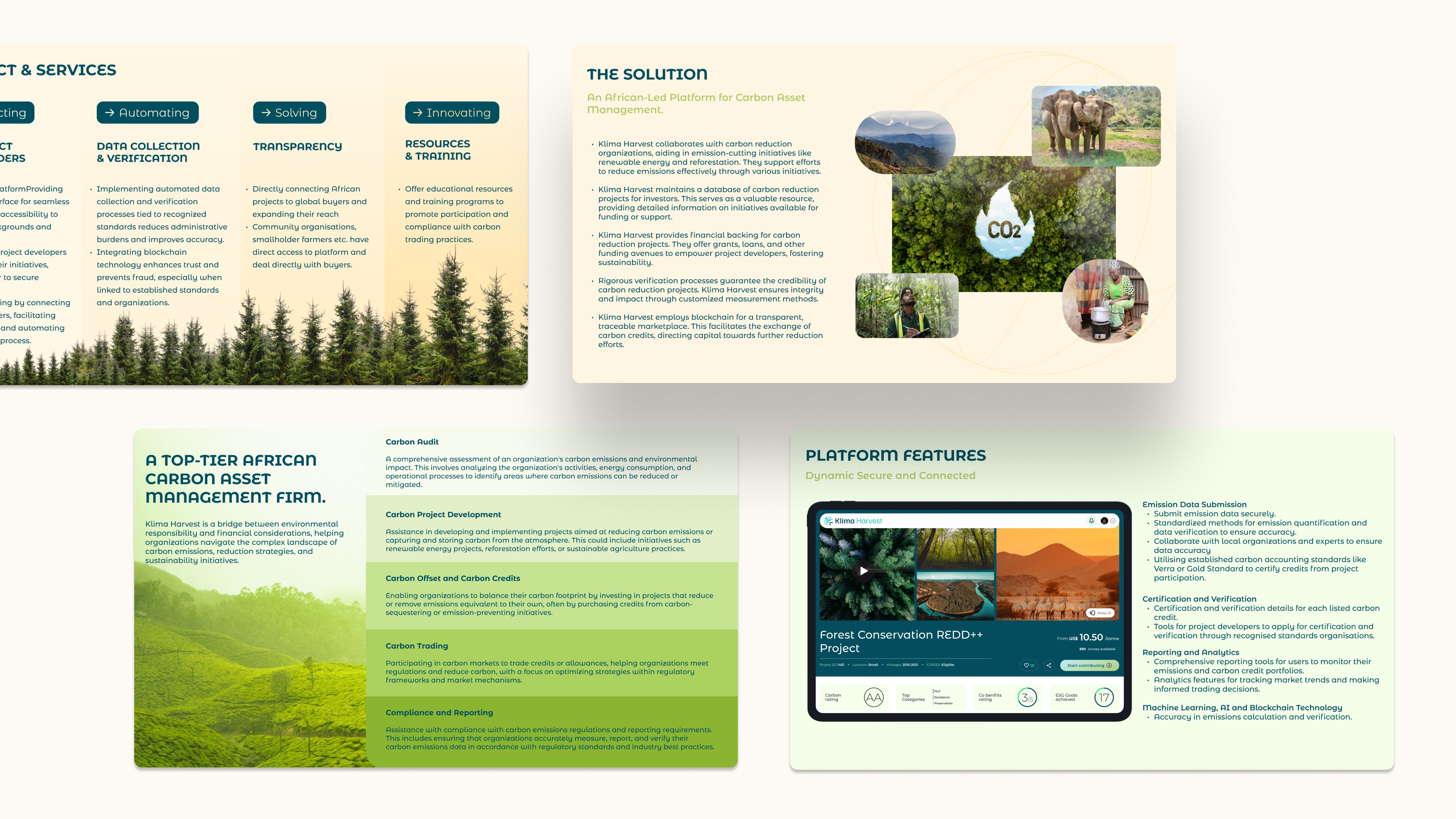
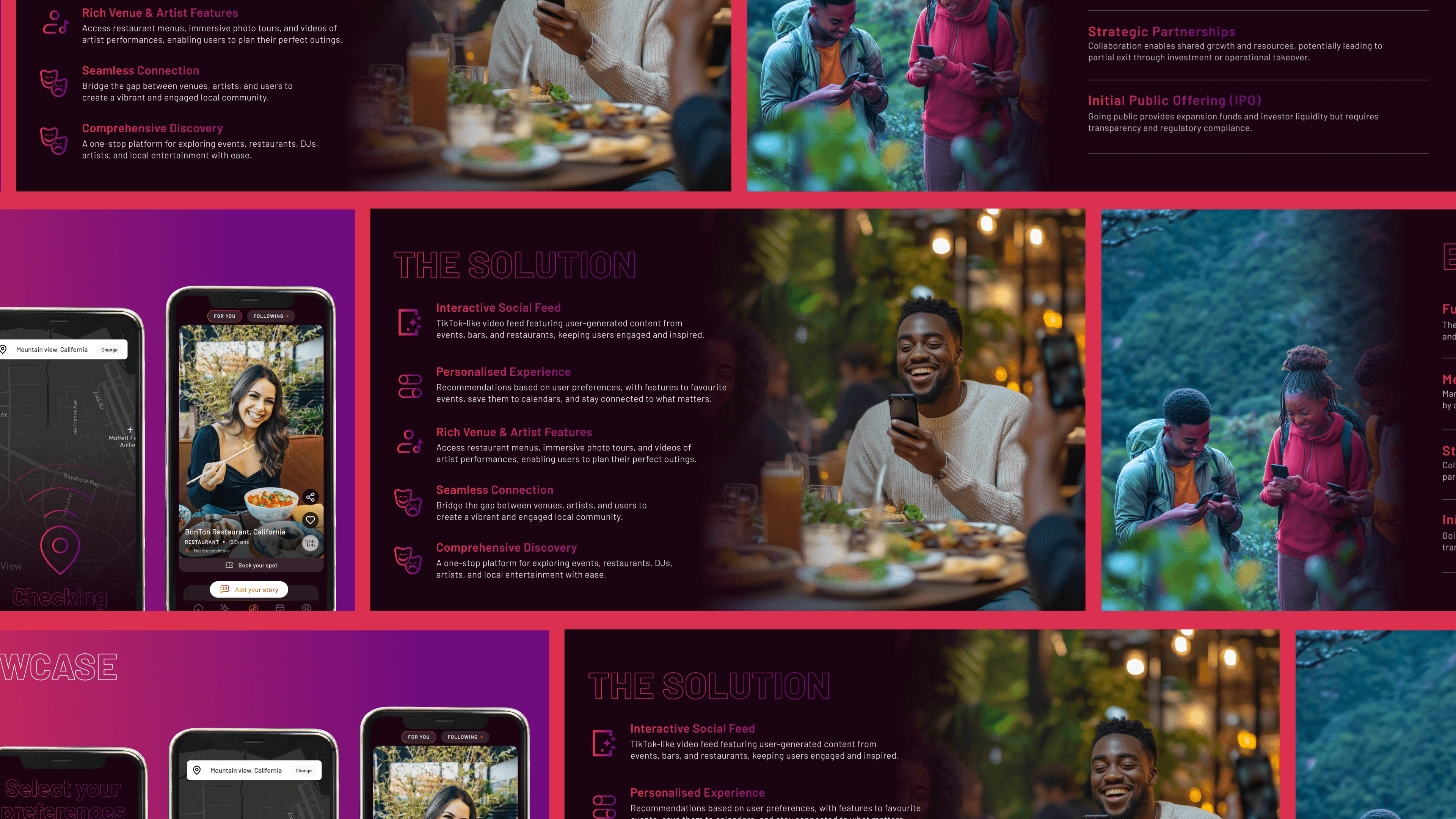
Once the structure is in place, the real fun begins. Typography stays consistent throughout. The color palette reflects the brand while holding the line between vibrant and professional. I use images and illustrations to do narrative work, moving the story forward.
Refining and Testing
Once the deck is ready, I test it like a stranger would see it. If someone was encountering this story for the very first time. Is the narrative clear? Where does attention drift? Where does something need more proof?
Finding the narrative
The comes the story arc. I imagined your brand as the protagonist of a great adventure. Every good story needs a hook, a conflict, a resolution, and an aspirational ending.
The hook is a bold statement or a statistic that stops the room. The conflict is the problem, the pain point your brand exists to solve. The resolution is your solution. And the aspirational ending, the vision, the why us that they remember when you walking out of the room.

Structiring the deck
I map out the flow of the pitch deck, ensuring each slide felt like a natural continuation of the story.
Title Slide
This is the first impression. I make it clean and bold, featuring the brand name, tagline, and an inspiring visual that hinted at the brand’s vision.
Problem Slide
I paint a vivid picture of the problem, focusing on its urgency and impact. Instead of dumping data, I used a real-world example to create an emotional connection.
Solution Slide
Letting the solution shine. I keep the design minimal, using visuals to illustrate how the product worked and the key benefits it delivered.
Market Opportunity Slide
Investors needed to see the potential. I showcase the market research, persona details and data in a simple, digestible format.
Traction Slide
Early wins are gold. I turn metrics and milestones into a visual story, using graphs and timelines to show growth. If the startup is pre-revenue, I highlight metrics like user acquisition or engagement.
The Ask Slide
The closer. This slide is crystal clear: how much the startup needs, what the funds would be used for, and what investors will get in return.